Promoting safer boating while protecting Florida’s coastal ecosystems.
Create a protective buffer for swimmers, divers, snorkelers and free divers & boaters.
Keeping boats further away keeps them from dropping anchors on the coral reef.
Sea turtles come to shore to lay eggs. Manta Rays swim 200-300 yards from shore.
Keep fishermen from damaging the coral reef with fishing line.
Promoting safer boating while protecting Florida’s coastal ecosystems.
Create a protective buffer for swimmers, divers, snorkelers and free divers & boaters.
Keeping boats further away keeps them from dropping anchors on the coral reef.
Sea turtles come to shore to lay eggs. Manta Rays swim 200-300 yards from shore.
Keep fishermen from damaging the coral reef with fishing line.
Wakes begin stronger closer to the boat. Wake energy dissipates with distance.
Wave energy increases in height & power as it approaches shore.
Damage shorelines, docks, and seawalls, erodes beaches.
Anchoring destroys coral reefs and disturbs wildlife habitats.
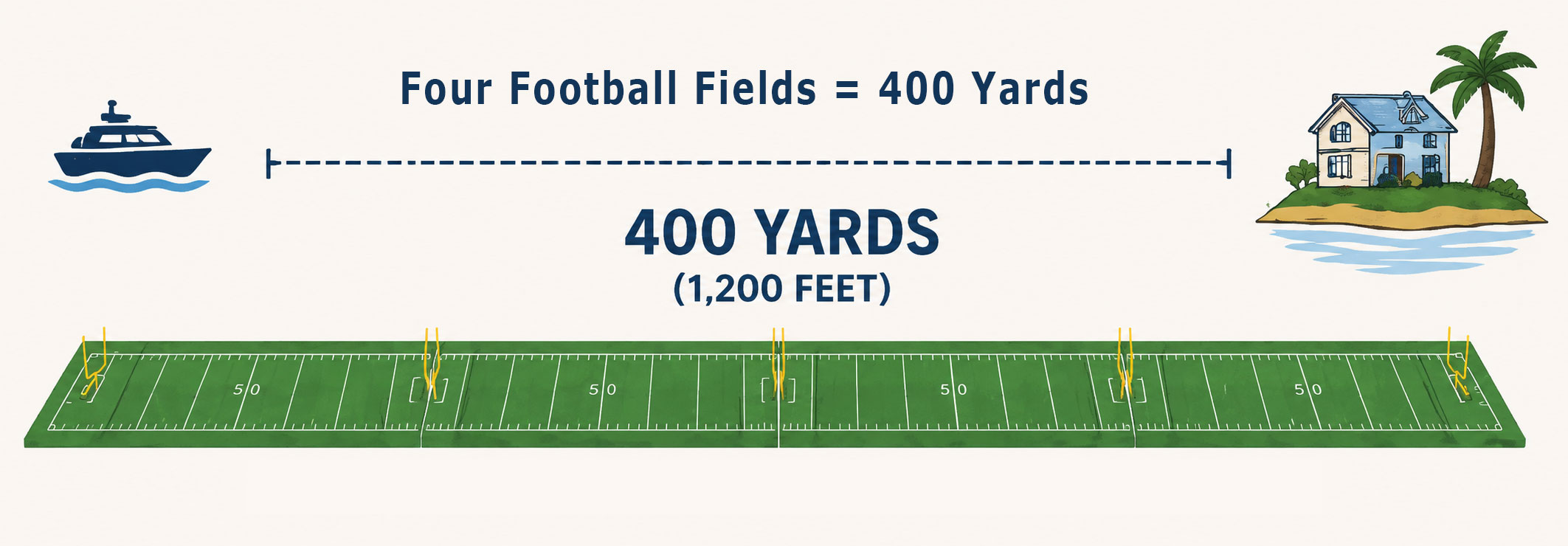
It’s the length of four football fields touching end to end.
It makes everyone safer, protects the coral reefs and the shoreline
High Wake Energy
Severe shoreline erosion
High risk to swimmers
Moderate Wake Energy
Potential for Damage
Risky for Swimmers
Low Wake Energy
Shorelines Protected
Safety for swimmers
Florida leads the nation in boating accidents and fatalities. As our coastal population and tourism surge, our maritime safety laws remain dangerously outdated. We are sharing the water under rules written for a different era, and the human cost is tragic and entirely preventable. The Florida Safe Waters Coalition champions two critical legislative reforms to protect swimmers, snorkelers, and divers while ensuring responsible boating
Currently every city in Florida sets the minimum distance from shore. Play it safe and stay 400 yards from shore.
Learn how to be a safe boat operator by taking an approved FWC course. It’s educational and require by law.
Learn about safety equipment you are required to have on your boat. Check out the list of equipment required by law.
Download flyers, social media graphics, and poster to help spread the words.
Access templates and resources to support locals for shoreline safety zones.